How Ukraine's Drone War Rewrote the Counter-UAS Playbook
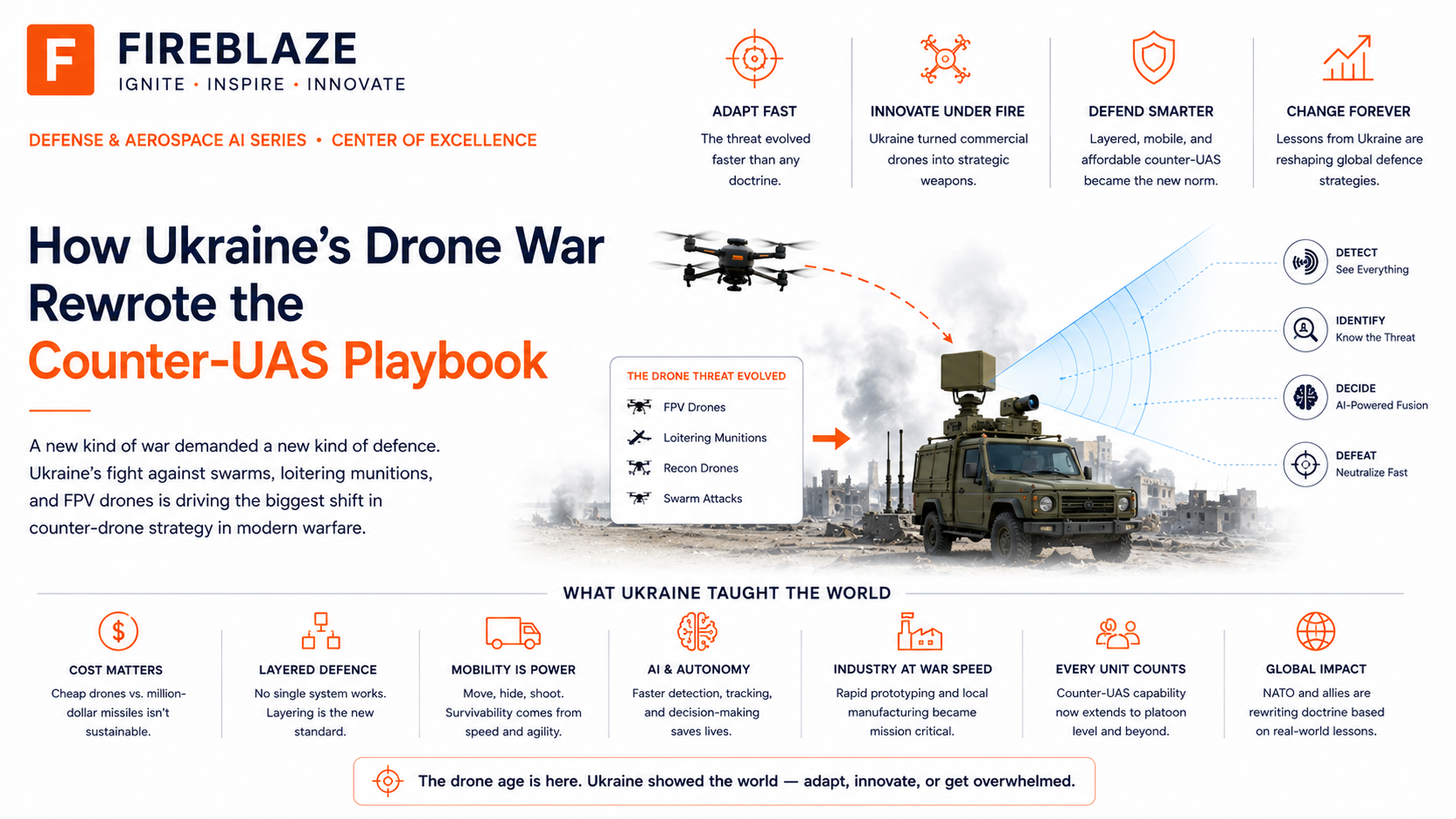
The World's Live Laboratory
Since 2022, Ukraine has become what analysts now openly call the world's leading real-world proving ground for drones and counter-drone technology. Every major military force on Earth is studying what's happening there, not as a historical case study, but as a live feed — because the tactics on both sides are being rewritten every few months, not every few years.
The Fiber-Optic Turning Point
For the first two years of the war, electronic warfare (EW) — jamming a drone's radio control signal — was the primary counter-drone tool on both sides. Then, in 2024, fiber-optic guided drones appeared: instead of a wireless radio link that can be jammed, these drones are controlled through a literal physical cable spooling out behind them. No radio signal means no jamming target. Analysts studying the conflict describe this single development as rendering the EW arms race between Russia and Ukraine effectively obsolete for that drone category overnight.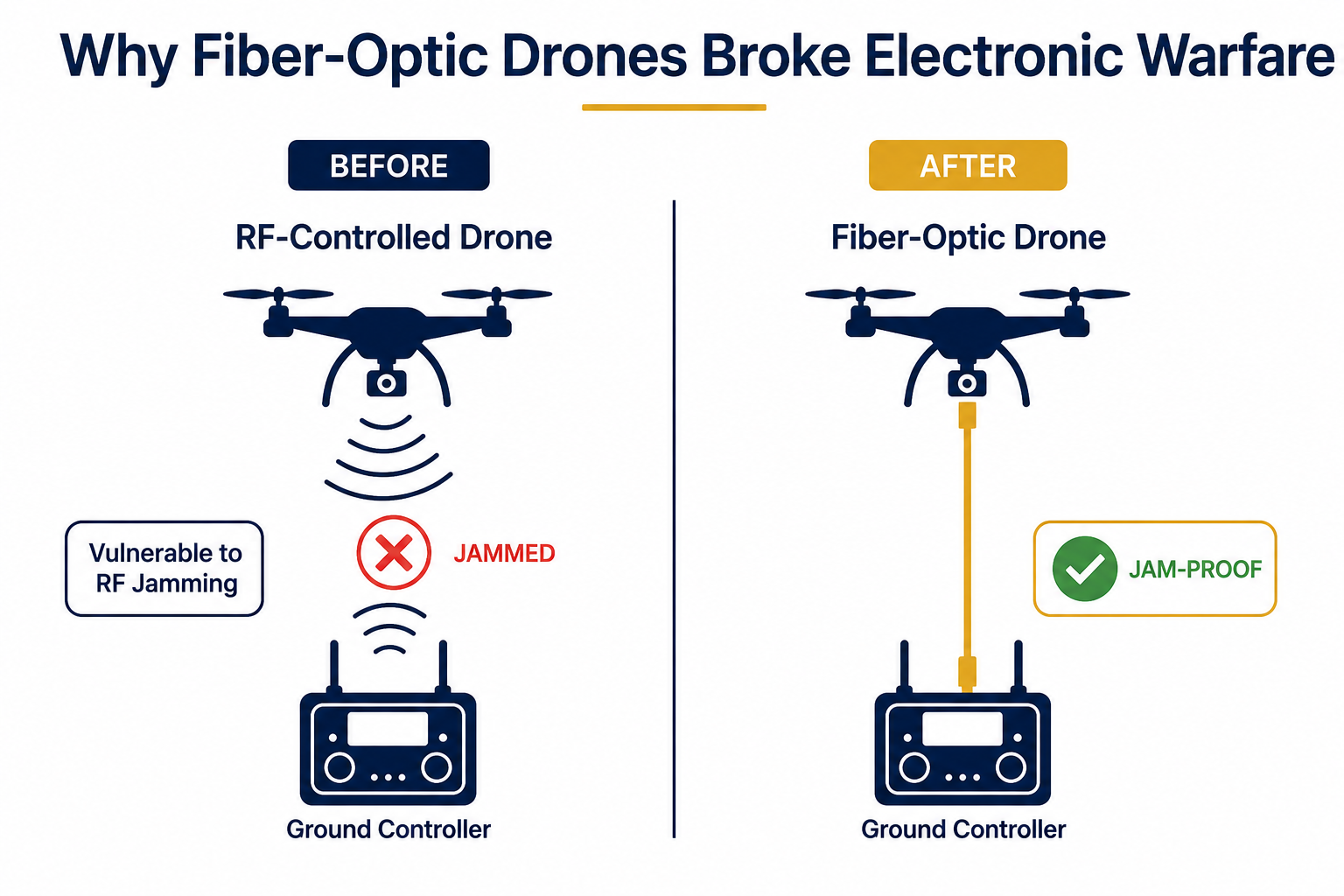
2025: The Year AI Took Over
If 2024 was defined by fiber-optic cables defeating jamming, 2025 was defined by AI stepping in to solve the next problem: keeping drones flying and on-target even when GPS is spoofed or jammed and communications drop entirely. Ukrainian engineers built drones with onboard computer vision, predictive navigation, and offline-capable autonomy — meaning a drone can complete its mission even if its connection to the operator is cut mid-flight. Analysts researching the conflict describe AI-driven coordination and autonomous decision-making as the strategic game-changer of that year, marking the start of a race toward multi-drone, AI-coordinated swarms rather than single remotely piloted aircraft.
Adversary tactics evolved just as fast on the other side: reports from early 2025 found newer Shahed-type attack drones being controlled through bots on the Telegram messaging app, routed over Ukrainian mobile phone networks instead of GPS — a workaround built specifically to defeat GPS-jamming defenses.
Why Layered Defense Became the Only Answer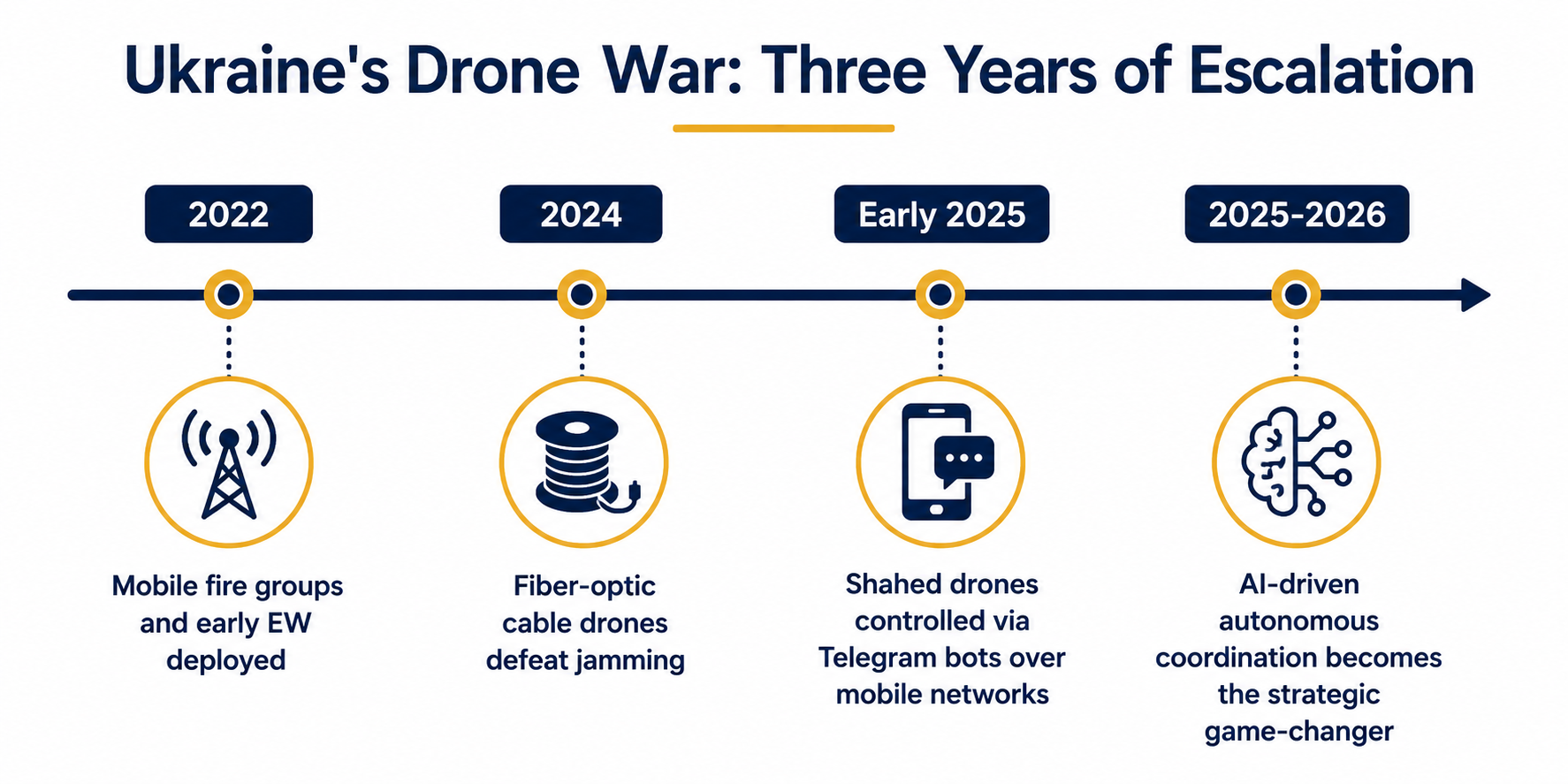
A recurring conclusion across defense analysts and NATO-adjacent panels in 2026 is that no single counter-drone technology works on its own anymore. As one Eurosatory 2026 panel put it plainly: electronic warfare is "perishable" — any jamming advantage has a shelf life measured in months, sometimes weeks, before the other side adapts around it. The answer that's emerged isn't a better version of any single tool, but a layered system: multiple sensors and multiple defeat mechanisms working together, modular enough to swap in new capability quickly as adversary tactics shift.
Ukraine's own counter-swarm experiments illustrate why layering matters so much: attacking with multiple FPV drones from different angles simultaneously makes jamming any single attack vector far less effective, since disrupting one drone still leaves the others active. A defender relying on one detection method or one jamming frequency gets overwhelmed by exactly this kind of coordinated, multi-vector attack.
What This Means for Every Military Watching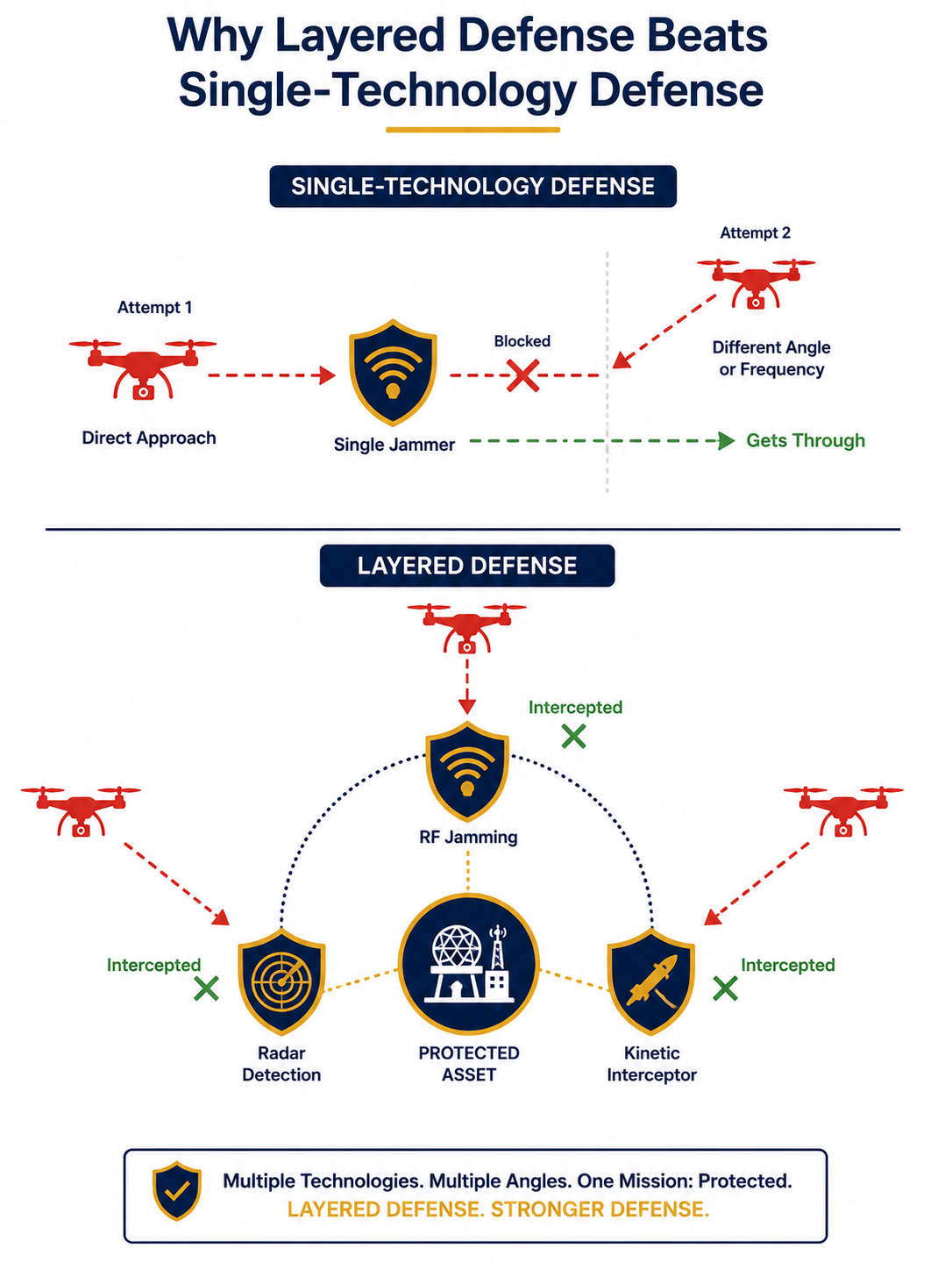
The lessons coming out of Ukraine are shaping procurement decisions well beyond Eastern Europe in 2026:
- Armored vehicles without built-in counter-drone protection are now considered highly vulnerable to cheap FPV attacks, pushing militaries toward active protection systems as a standard vehicle requirement, not an optional add-on
- Naval surface vessels face a genuinely new threat category from cheap uncrewed surface vehicles, and doctrine to counter them doesn't fully exist yet at scale
- Electronic warfare has shifted from a specialized support function to a core combined-arms capability, integrated into nearly every ground operation rather than deployed only by specialist EW units
- Production speed now matters as much as technical sophistication — Ukraine's ability to iterate and field new drone and counter-drone capability within days, based on direct soldier feedback, has become the benchmark Western procurement systems are being measured against, and largely found too slow by comparison
Sources
Electro Optic Systems / Shephard Media (Eurosatory 2026 panel coverage); Defense Opinion (Battlefield Drone Innovation, Feb 2026); U.S. Army (Learning Lessons from Ukraine, May 2026); GIS Reports (Drones Transform Warfare, May 2026); Modern War Institute at West Point (Counterdrone Innovation Roadmap); Ifri (Mapping the MilTech War, Feb 2026); Ukraine War Analytics (Ukraine Drone Warfare Tactics 2026).