The Open Datasets Quietly Powering the Next Generation of Space Defence AI
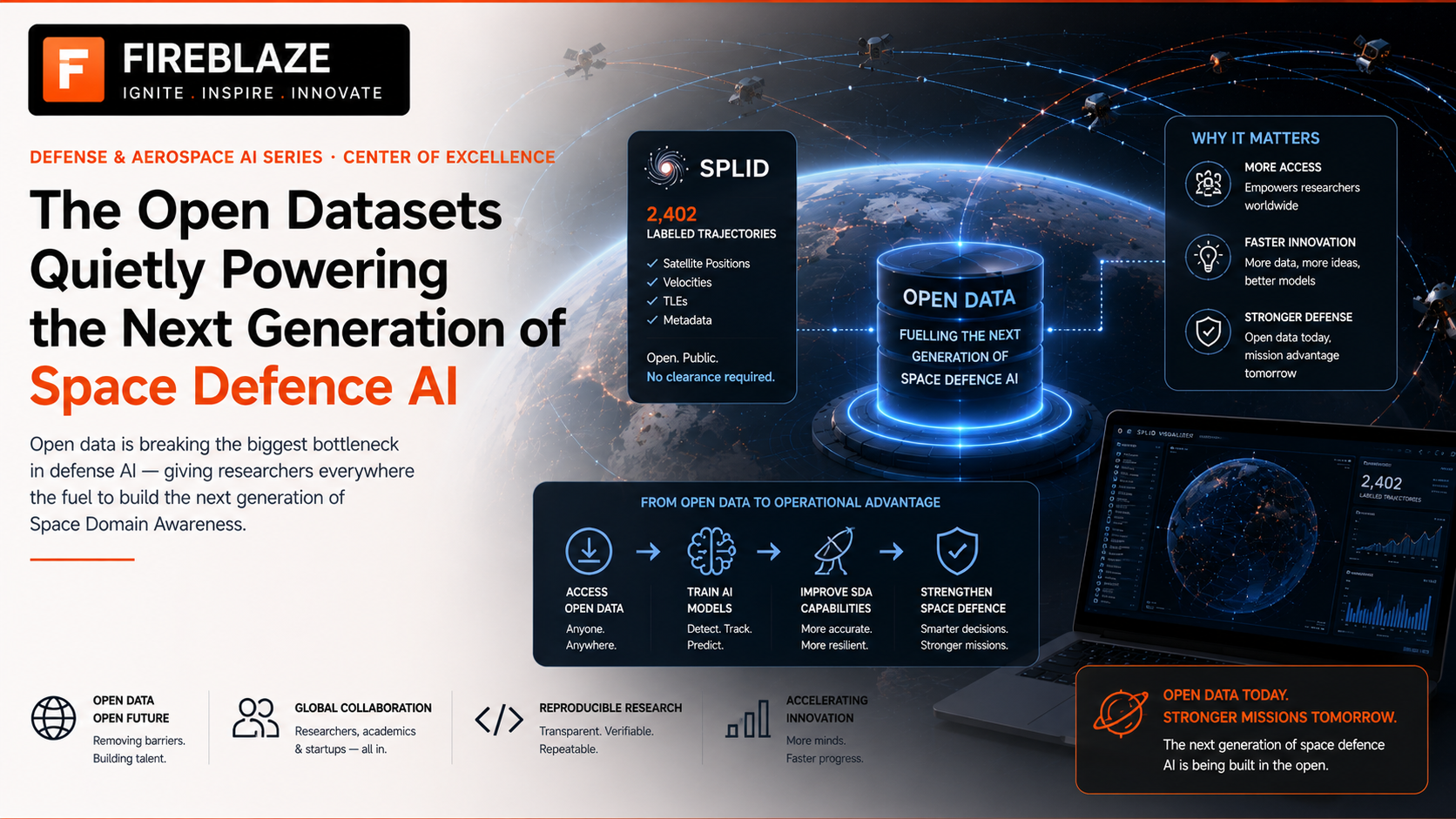
Every AI system you've read about in this series — TALOS, Delta, and the SDA market broadly — depends on one thing that rarely gets discussed: data to learn from. In defense, that data is often classified, restricted, or simply doesn't exist in usable form. That's exactly why a small number of open, public datasets have become disproportionately important to the entire field.
1. The core problem: defense AI needs data it usually can't have
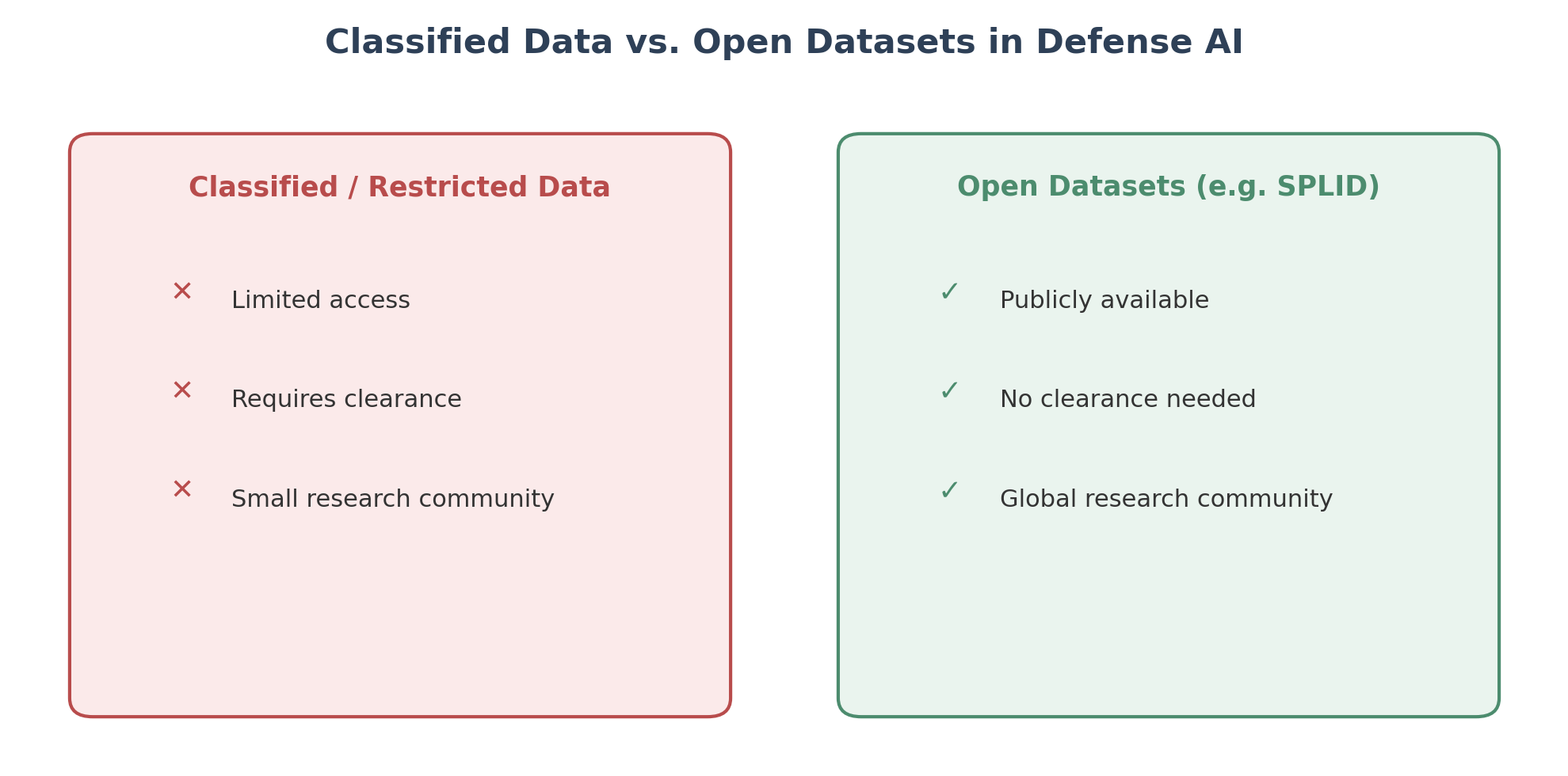
Most modern AI progress has been driven by huge amounts of freely available data — text from the internet, millions of labeled images, and so on. Defense AI doesn't have that luxury. Real operational data — actual satellite maneuver logs from military assets, real adversary behavior, genuine failure records from defense hardware — is either classified, commercially sensitive, or simply too rare to build a large training dataset from, since real conflicts and real equipment failures are (fortunately) uncommon events.
This creates a genuine bottleneck: a defense AI research team can have a great idea and strong technical skills, but without usable data, there's nothing to actually train or test a model on.
2. The solution the field has converged on: open academic challenge datasets
To get around this bottleneck, research institutions have started building and releasing carefully constructed open datasets — specifically designed to let researchers work on real defense-relevant problems without needing classified access.
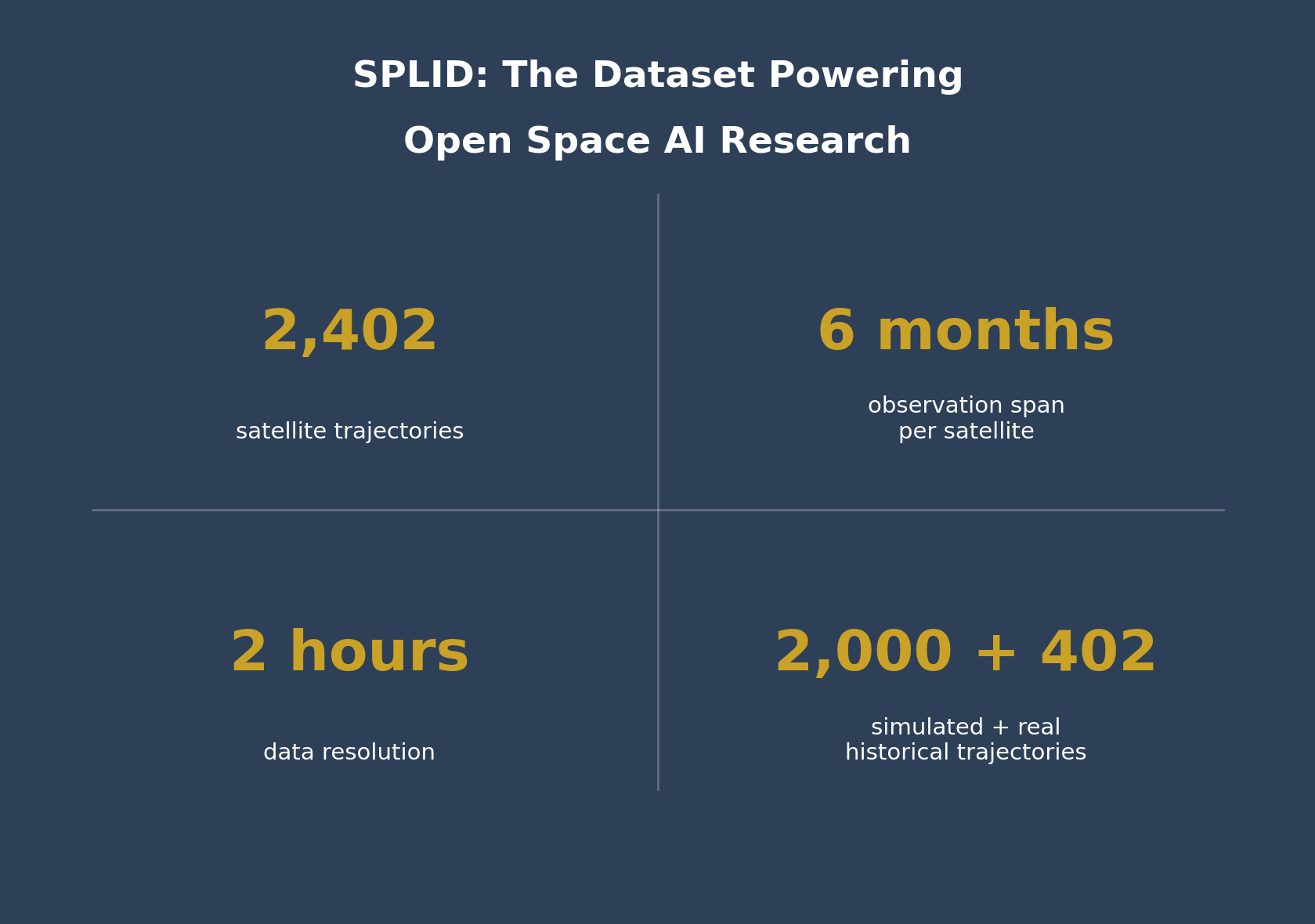
The clearest example in the space domain is SPLID — the Satellite Pattern-of-Life Identification Dataset, built by MIT's Astrodynamics, Space Robotics, and Controls Lab (ARCLab), in partnership with MIT Lincoln Laboratory and the U.S. Department of the Air Force through the DAF-MIT AI Accelerator. SPLID contains 2,402 satellite trajectories in geostationary orbit, each spanning six months of observation at two-hour resolution — a mix of 2,000 high-fidelity simulated trajectories built to capture diverse real-world behaviors and propulsion types, plus 402 trajectories drawn from real historical tracking data. The dataset comes with labeled behavioral categories (like routine stationkeeping versus active maneuvering) and marks the exact moments a satellite's behavior changes — precisely the kind of labeled, structured data that's almost impossible to get from classified sources.
MIT ran this as a public global competition in 2024 — the MIT ARCLab Prize for AI Innovation in Space — open to individuals and teams of any age, background, or skill level, with a public leaderboard and open-source baseline code. The winning team, working under the name Hawaii2024, built a solution combining custom CNN and LSTM architectures with careful feature engineering, and published their full code publicly, meaning anyone starting a project in this space today can study a working, competition-winning solution before building their own.
3. Why this specific dataset matters so much right now
The organizers behind SPLID were explicit about their motivation: despite huge amounts of historical data existing about objects in Earth orbit, AI adoption in space domain awareness has remained limited — largely because that historical data wasn't structured, labeled, or accessible enough for AI researchers to actually use. SPLID was built specifically to remove that barrier.
That decision has had a real, visible effect. Since its release, SPLID has become the reference dataset for a growing body of published academic research on satellite behavior classification, changepoint detection, and pattern-of-life analysis — work that would otherwise require classified access most researchers, students, and startups simply don't have.
4. This pattern isn't unique to space
The same open-dataset strategy shows up across defense AI more broadly, for the same underlying reason. Public physical-security-relevant datasets like RadioML (for radio signal classification) and various public counter-drone detection datasets follow an identical logic: since real classified sensor and signal data can't be widely shared, purpose-built open or synthetic datasets get created instead, letting a much larger community of researchers — inside and outside traditional defense institutions — contribute meaningfully to problems that would otherwise be closed off to a small circle of cleared insiders.
5. Why this matters for talent, not just technology
Open datasets like SPLID don't just enable individual research projects — they function as a talent pipeline. A student, researcher, or startup with no security clearance and no access to classified systems can still build a genuinely competitive, publication-worthy solution to a real defense-relevant problem, entirely using public data and open competition infrastructure. MIT has explicitly said it intends to keep running this competition in future years on new topics, suggesting more of these open, defense-adjacent datasets are likely on the way.
That matters more than it might first appear. The organizations best positioned to benefit from the next generation of defense AI talent won't necessarily be the ones with the most classified access — they'll increasingly be the ones who know how to find, use, and build on the right open datasets early, before that talent and expertise gets absorbed by larger, better-resourced organizations.
Sources: MIT News; MIT AeroAstro; ARCLab-MIT GitHub (splid-devkit); Springer Journal of the Astronautical Sciences; arXiv (Advancing AI Challenges for the United States Department of the Air Force); DavidBaldsiefen/splid-challenge (GitHub, 2024 competition winner).