The IPO Countdown: Anduril, Shield AI, and the Defense-Tech Startups Going Public
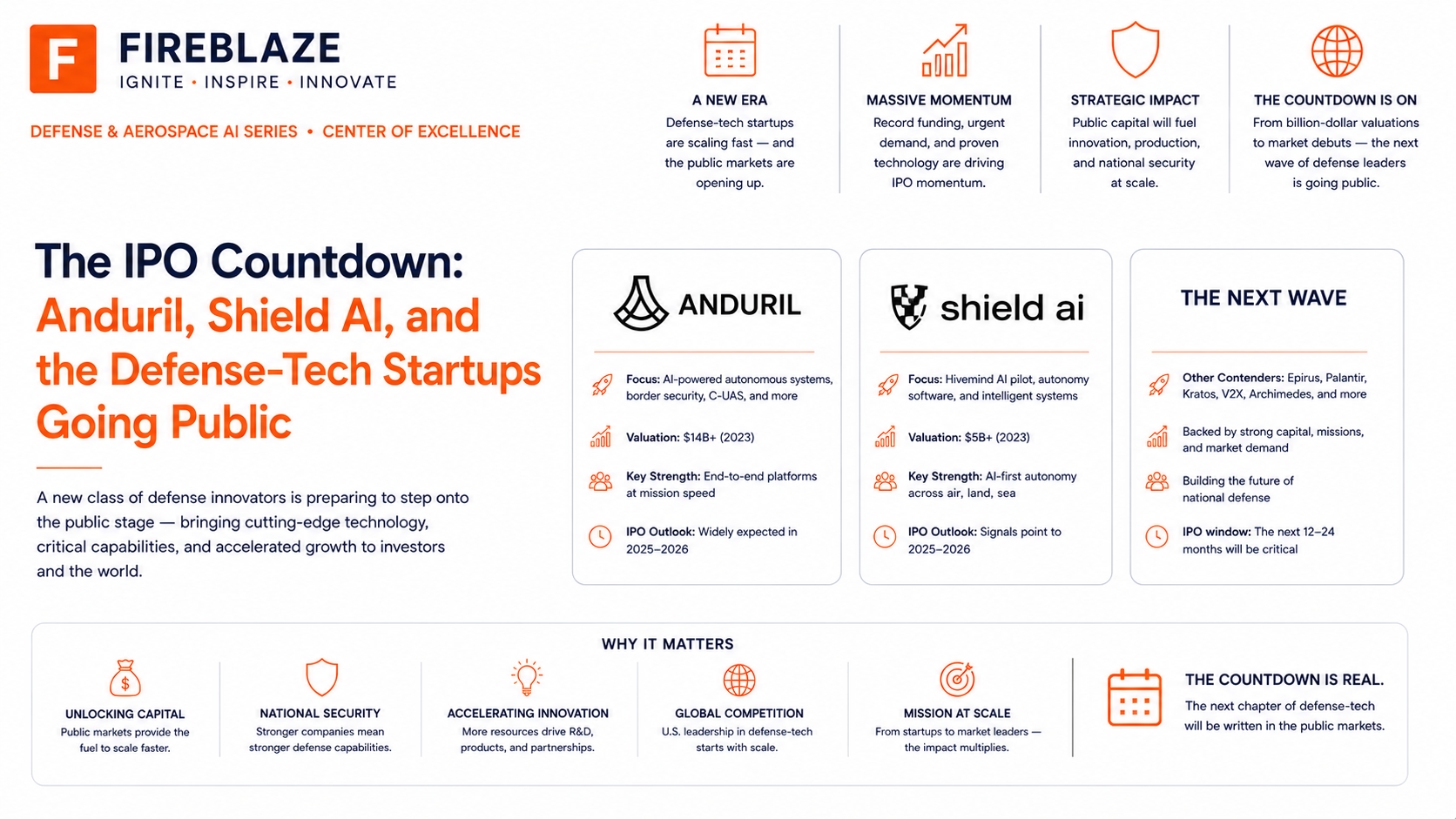
The Biggest Question in Defense Tech Right Now
Not "who wins the next contract" — but "who goes public first." A cluster of defense-tech companies has quietly built the kind of scale and valuation that used to take traditional defense primes half a century to reach, and in 2026 the question on every investor's mind is which one lists first, and when.
The Valuation Board
| Company | Focus | Latest Valuation |
|---|---|---|
| Anduril Industries | AI command software + autonomous hardware | $61 billion (May 2026) |
| Shield AI | Autonomous flight software (Hivemind) | $5–12.7 billion (reported range) |
| Helsing | European AI defense software | ~$18 billion (reported) |
| Saronic | Autonomous warships | $9.25 billion |
| Epirus | Directed-energy counter-drone | $1 billion+ |
| Scale AI | AI data infrastructure for DoD | $14 billion+ |
| Hermeus | Hypersonic aircraft | $1.5 billion+ |
| True Anomaly | Space warfare systems | $1 billion+ |
Why the Sudden Rush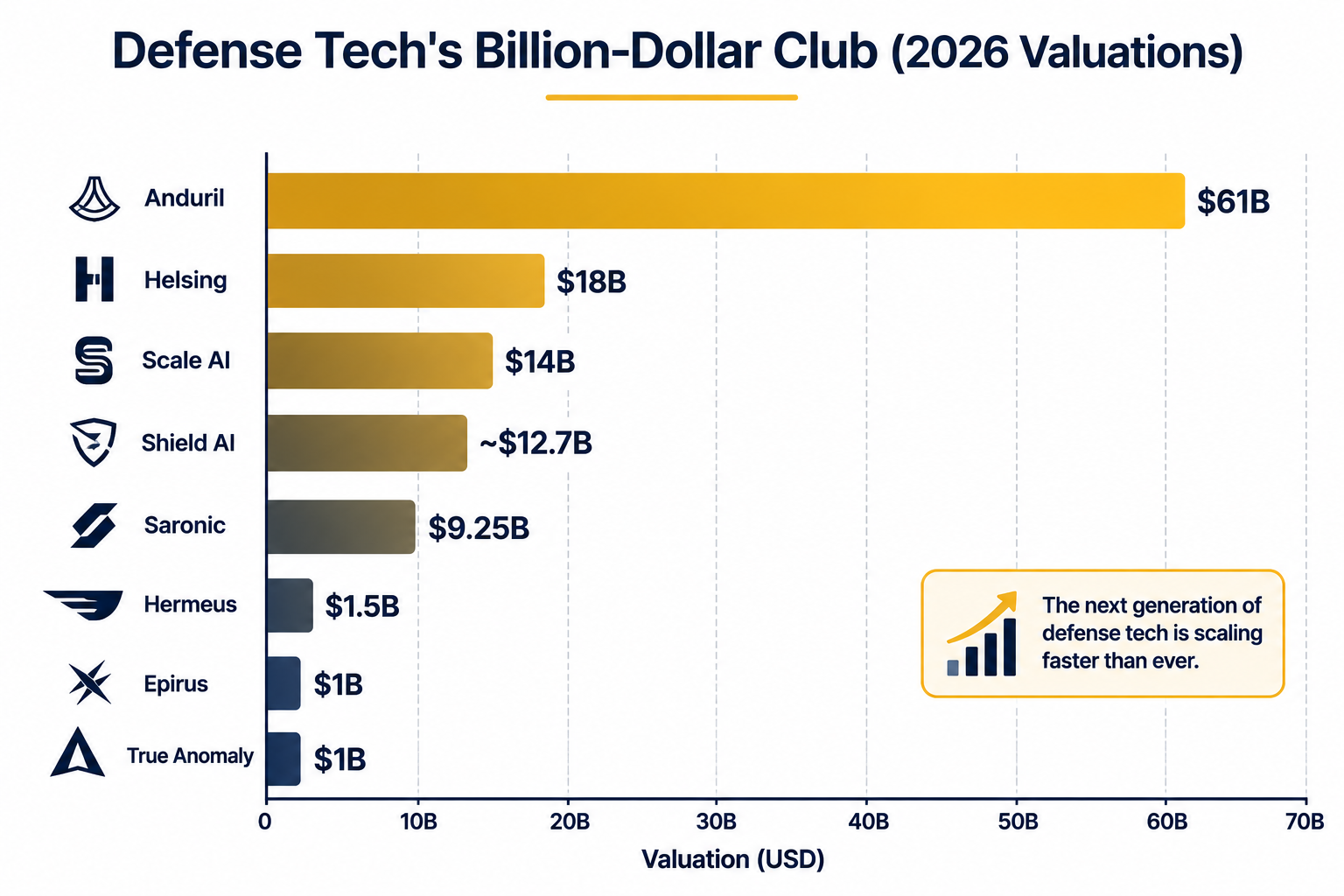
Three forces are pushing this cluster of companies toward the public markets at roughly the same time:
1. Revenue is finally catching up to valuation. Anduril alone reported approximately $2.2 billion in 2025 revenue and is targeting $4.3 billion in 2026 — real, contract-backed revenue growth, not just speculative funding-round hype.
2. Ukraine proved the technology works under real combat conditions. Investors no longer have to take these companies' claims on faith — three years of continuous battlefield validation in Ukraine has de-risked the underlying technology in a way defense-tech simply didn't have before 2022.
3. Government contracts are getting big enough to anchor a public offering. Anduril's $20 billion Army enterprise contract and Shield AI's Collaborative Combat Aircraft role give public-market investors the kind of long-duration, government-backed revenue visibility that makes an IPO pitch credible.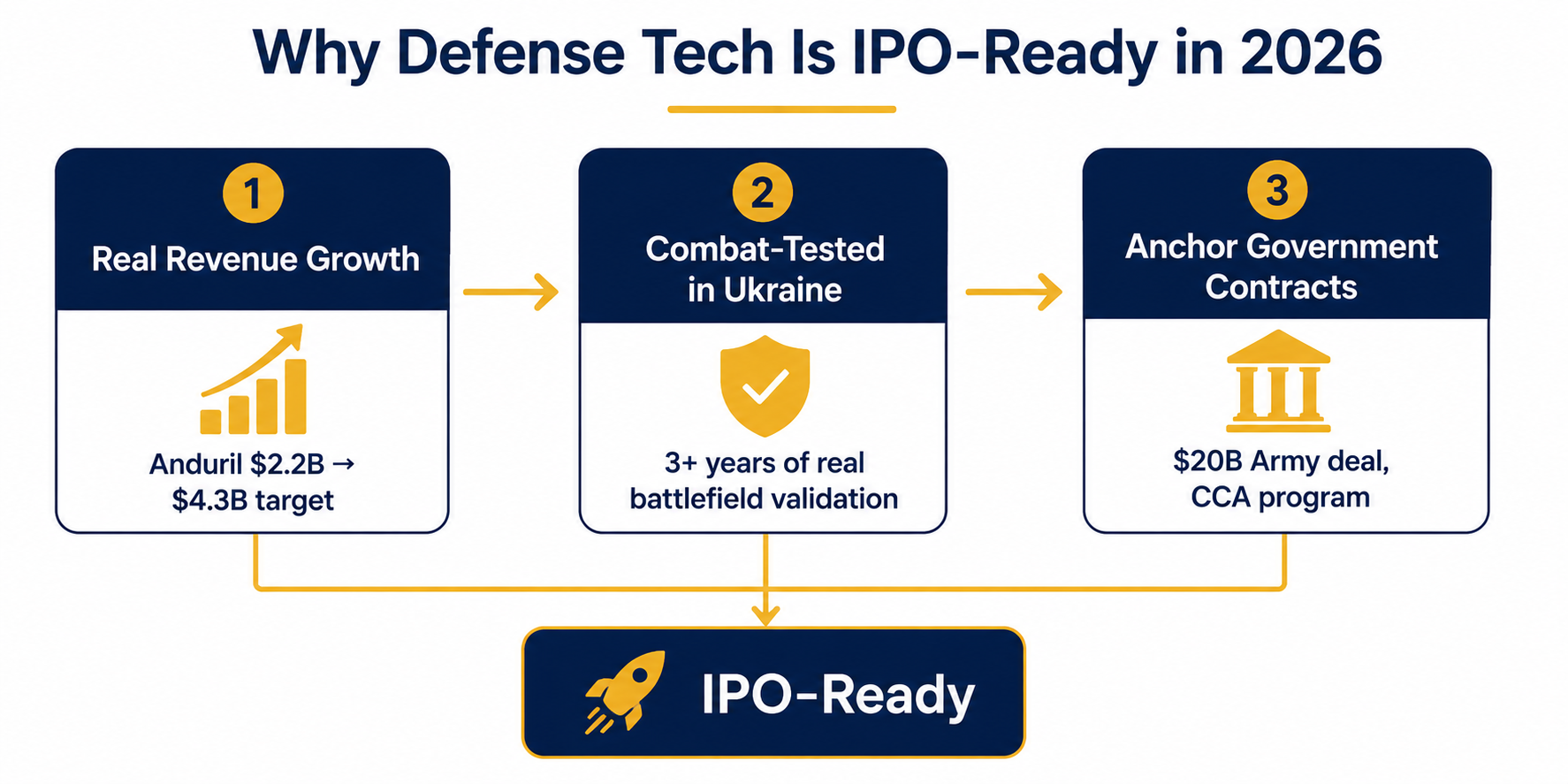
Who's Actually Closest
Palmer Luckey has said publicly that an Anduril IPO is "definitely" coming, with Forge Global estimating a 60% probability within 2026 — likely timed after the company's Arsenal-1 manufacturing facility in Ohio reaches full production scale. But CEO Brian Schimpf has pushed back on timing hype, cautioning it would be "bad to IPO in the middle of a hype cycle," and as of mid-2026 Anduril has not filed an S-1 or named underwriters.
Shield AI, Epirus, and Skydio are also frequently named as IPO candidates in 2026 industry coverage, though none has set a confirmed date either. The pattern across nearly all of them: real revenue, real combat validation, real government contracts — but a shared reluctance to rush a listing while private capital is still abundant and valuations keep climbing on their own.
What an IPO Would Actually Signal
A successful defense-tech IPO in 2026 or 2027 wouldn't just be a liquidity event for early investors — it would be a structural signal that public markets are ready to underwrite AI-native defense companies the same way they've underwritten traditional software and biotech growth stories for decades. That matters because public-market access changes how these companies can raise capital for the next phase of scale: manufacturing facilities like Arsenal-1, international expansion, and the kind of multi-billion-dollar production ramps that private venture rounds alone struggle to fund indefinitely.
Sources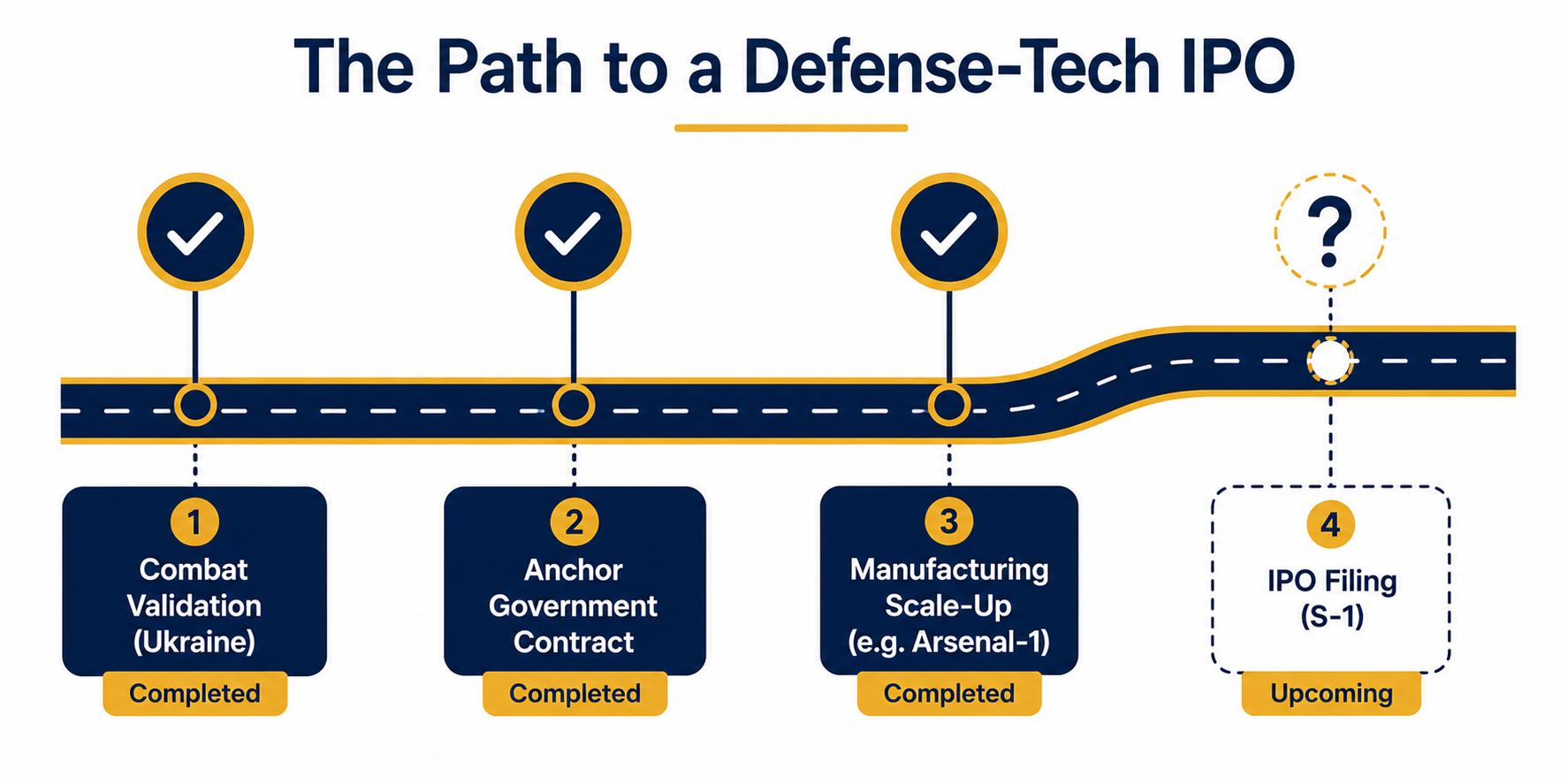
Value Add VC (Defense Tech Startups 2026 ranking, Anduril IPO 2026 analysis); New Market Pitch (Defense Tech Top Startups); FNEX (Anduril funding overview); TechCrunch (Epirus Series D coverage); Beginners in AI (Anduril Industries Explained). Valuation figures vary across sources and funding rounds and are presented as most-recently reported; none of these companies has filed a public S-1 as of the time of writing.