What Is Counter-UAS (C-UAS) — And Why Cheap Drones Broke Traditional Air Defense
The Problem in One Sentence
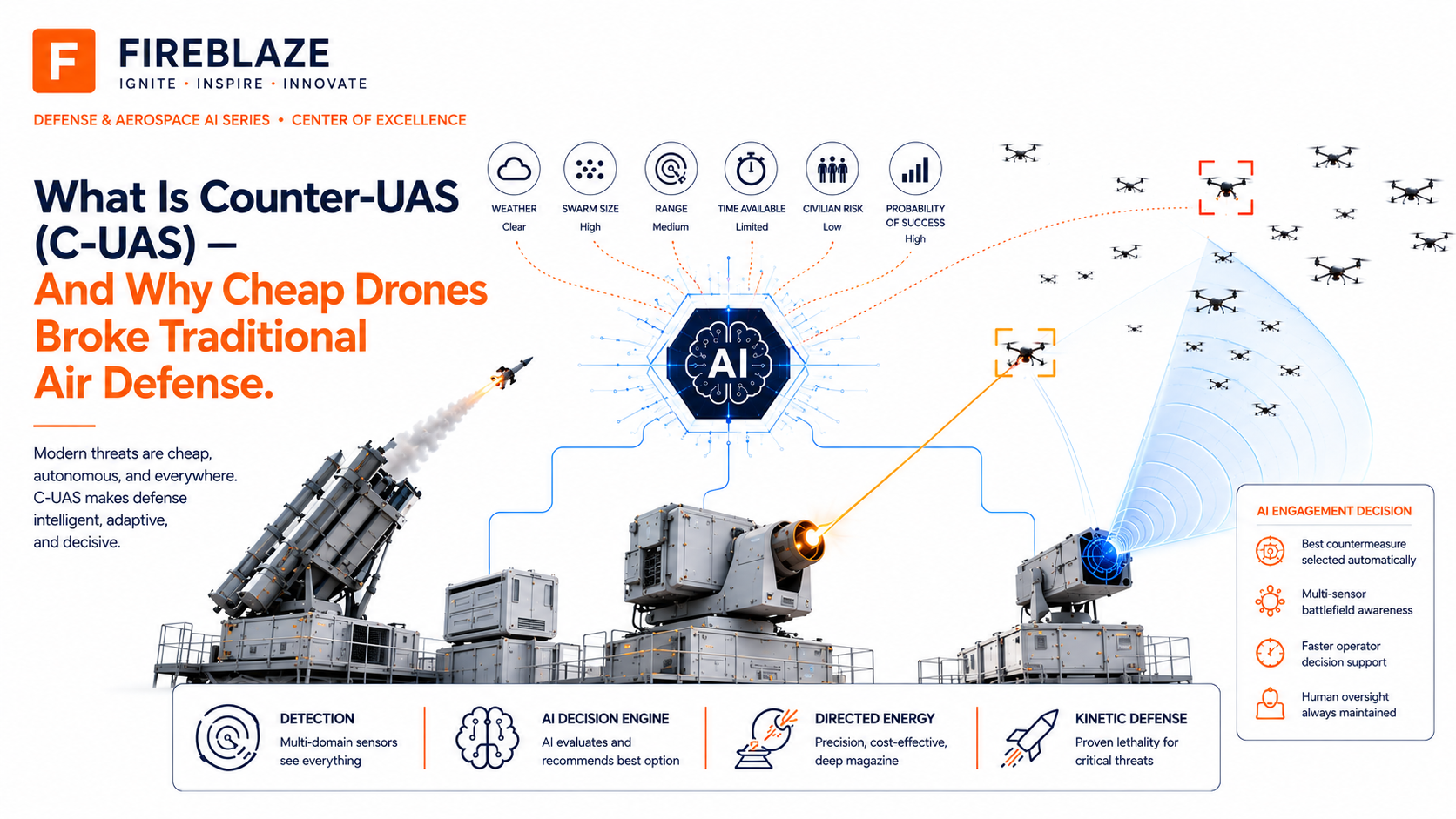
Counter-UAS, or C-UAS, is the umbrella term for every system designed to detect, track, identify, and defeat unmanned aircraft — from a hobbyist quadcopter drifting over a stadium to a coordinated swarm of explosive-laden drones targeting a military base. It sounds like a narrow technical niche. In practice, it has become one of the most urgent and fastest-moving categories in modern defense, because the drones it's built to stop have quietly broken the economic logic that traditional air defense was built on.
That logic used to be simple: a small number of very expensive, very capable interceptor missiles defended against a small number of very expensive, very capable enemy aircraft and missiles. Cheap, mass-produced drones destroyed that assumption on both sides of the equation at once.
The Numbers That Explain Everything
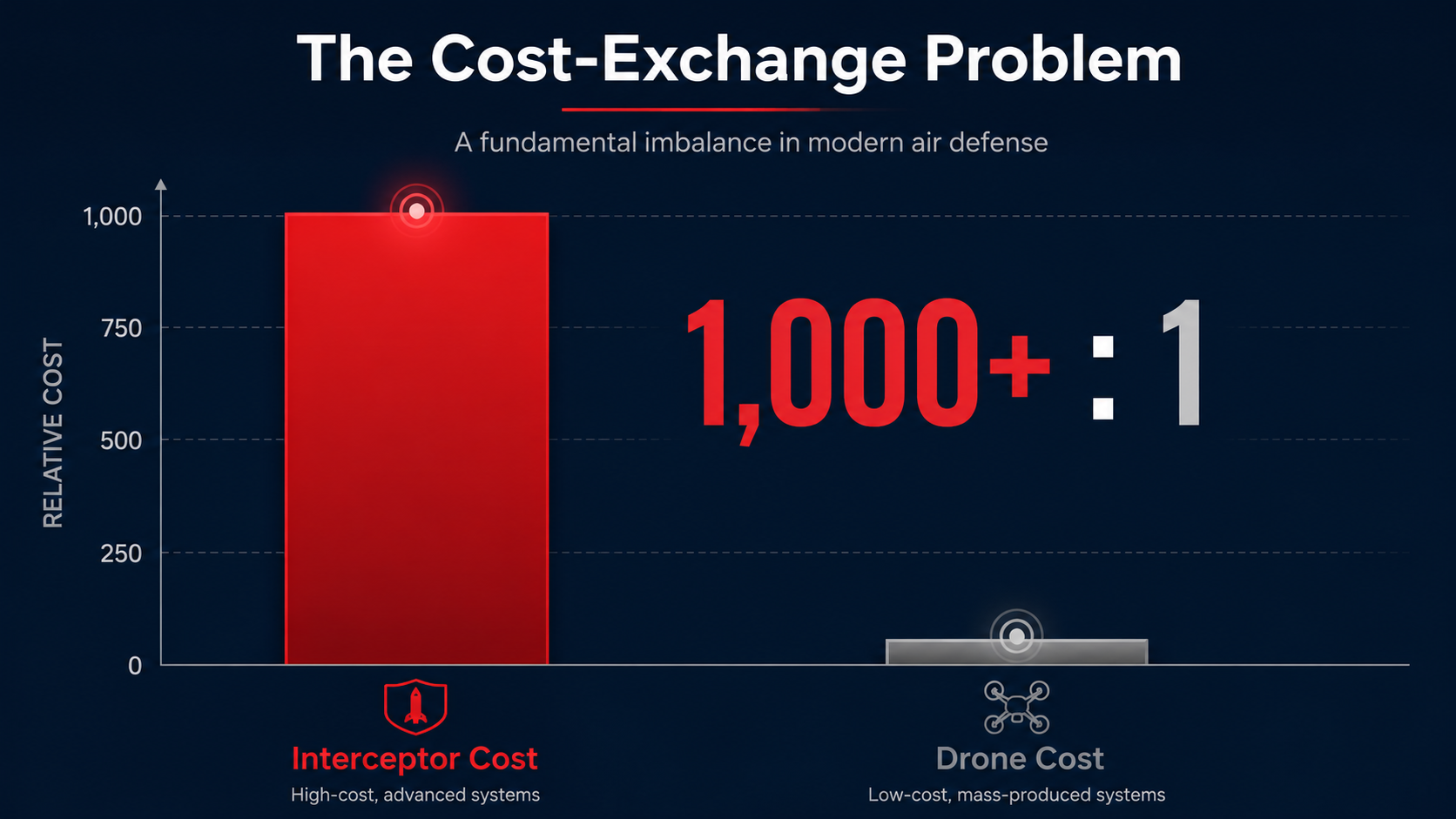
Recent conflicts have put hard figures on a problem defense analysts had been warning about for years. Depending on the theater and the systems involved, the cost-exchange ratio between attacker and defender now looks like this:
Engagement Context
Interceptor Used
Approx. Interceptor Cost
Approx. Drone Cost
Cost-Exchange Ratio
Red Sea, Houthi drone intercepts
Naval air-defense missile
~$2.1 million
~$2,000
Roughly 1,050 : 1
Poland airspace incursions
AIM-9 / AIM-120 missile
~$1 million
~$20,000
Roughly 50 : 1
UK test, laser-guided rocket vs. Shahed-class drone
APKWS rocket
$15,000–$20,000
$20,000–$50,000
Roughly 1 : 2 to 1 : 1
2026 Gulf conflict, sustained salvo defense
Patriot interceptors
Several million each
Tens of thousands each
Over 1,000 interceptors expended in 10 days
Figures drawn from recent defense-industry and open-source reporting on Red Sea, Eastern European, and Gulf drone-intercept engagements; exact costs vary by munition variant and contract year.
Even the most favorable ratio in that table — a cheap laser-guided rocket against a Shahed-class drone — only gets a defender to roughly break-even. Every other real-world engagement is a losing trade, and losing trades don't scale. A magazine that can be emptied in ten days by one determined attacker isn't a defense; it's a countdown.
Why This Wasn't Supposed to Happen
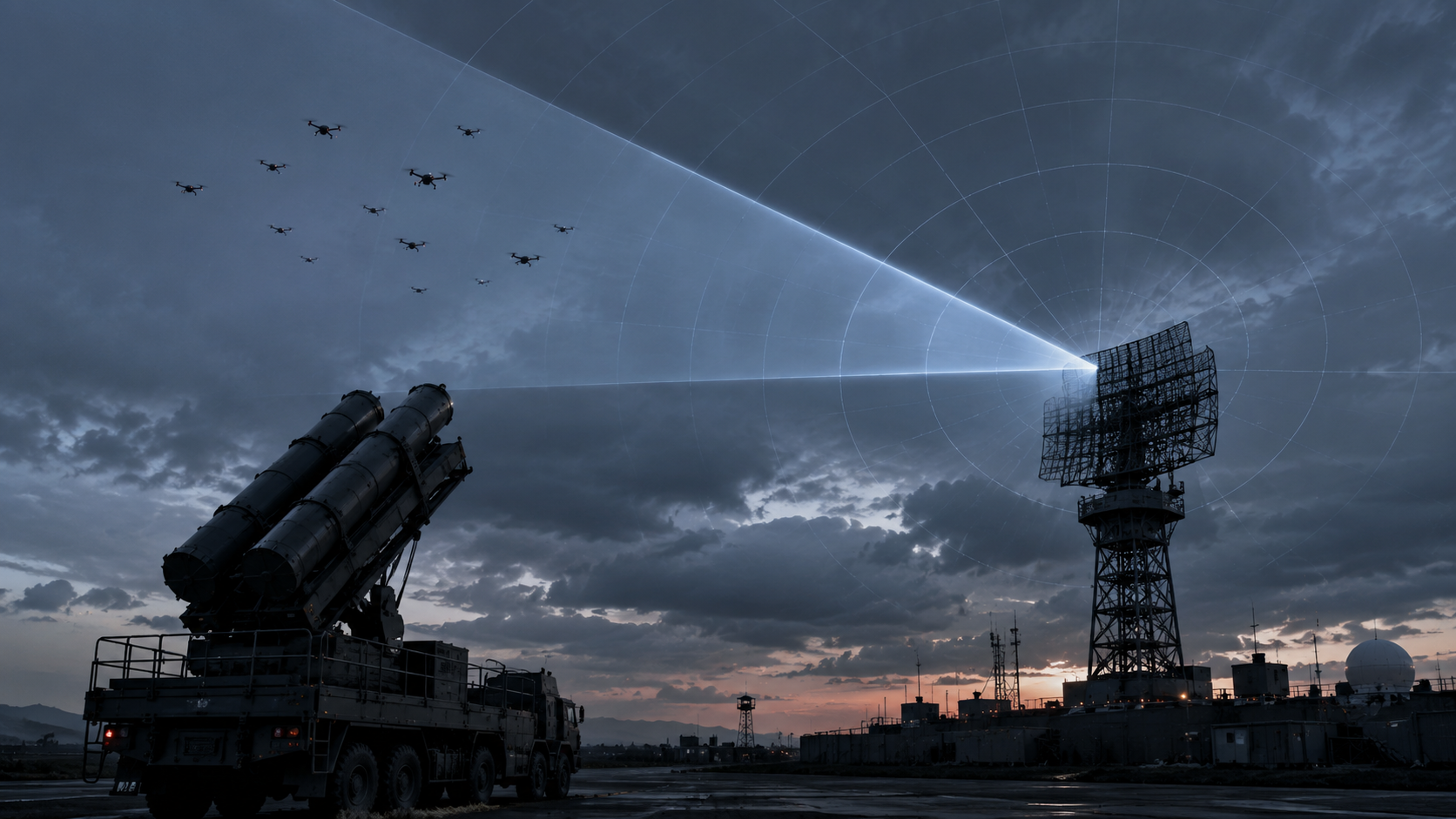
Traditional air defense architecture — radars, surface-to-air missile batteries, fighter intercepts — was built across the Cold War to counter a specific threat profile: fast, high-flying manned aircraft and ballistic or cruise missiles with predictable flight physics and large radar signatures. Small drones break nearly every one of those assumptions at once. Defense analysts often summarize the threat with the acronym LSS — Low, Slow, Small — describing exactly the flight profile that legacy radar and missile systems were never optimized to catch.
Layer onto that the fact that a single actor can now field dozens or hundreds of these drones simultaneously — commercially available "mothership" drones can extend command-and-control range, while long-range strike variants are capable of precision hits at costs from a few hundred dollars up past a million, depending on sophistication — and you get an attacker who can force a defender to make hundreds of expensive engagement decisions in a matter of minutes.
One recent U.S. Army analysis put it plainly: without scalable, affordable, layered defenses, adversaries will keep exploiting this asymmetry, overwhelming even the most advanced militaries.
How a Modern C-UAS System Actually Works
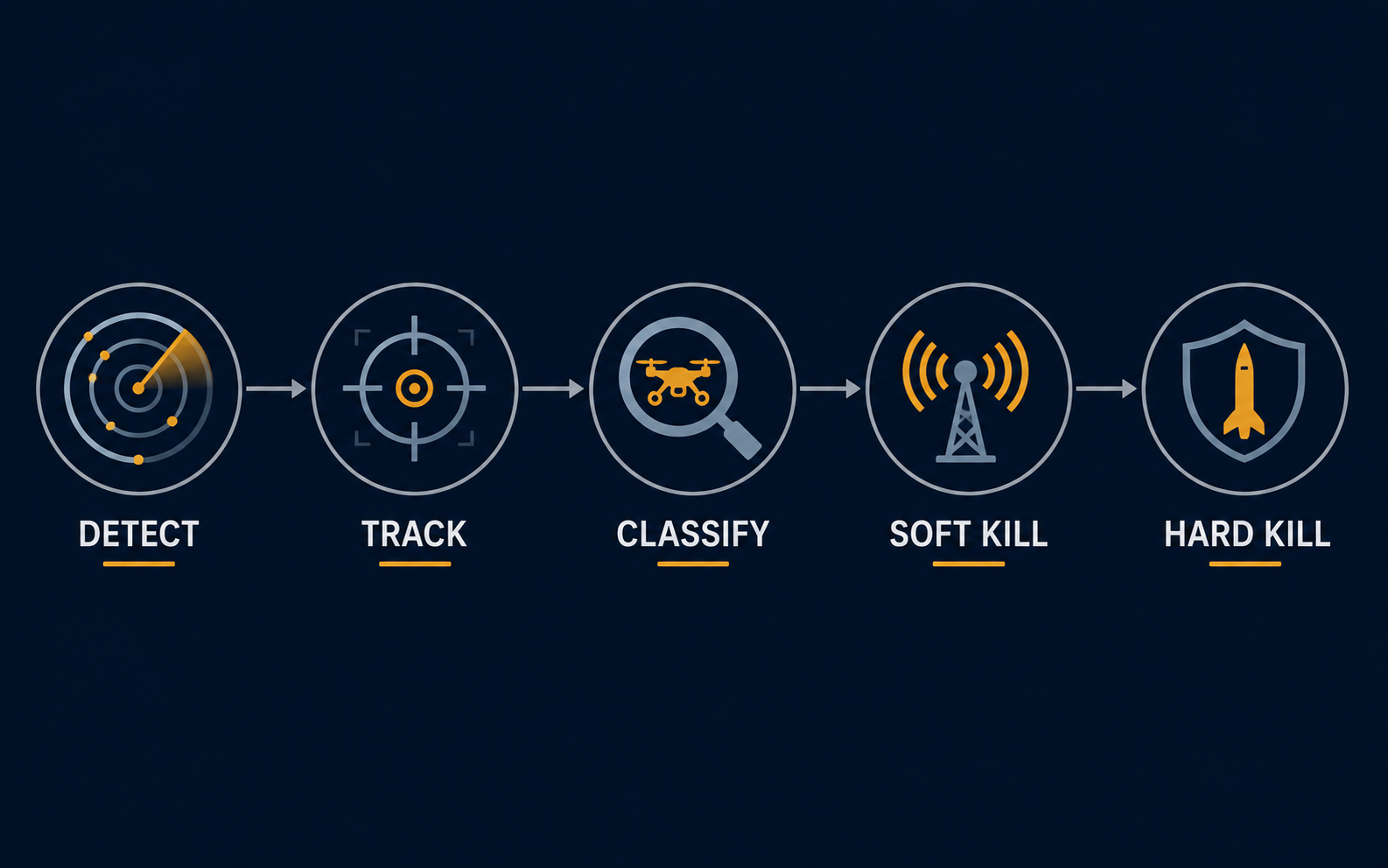
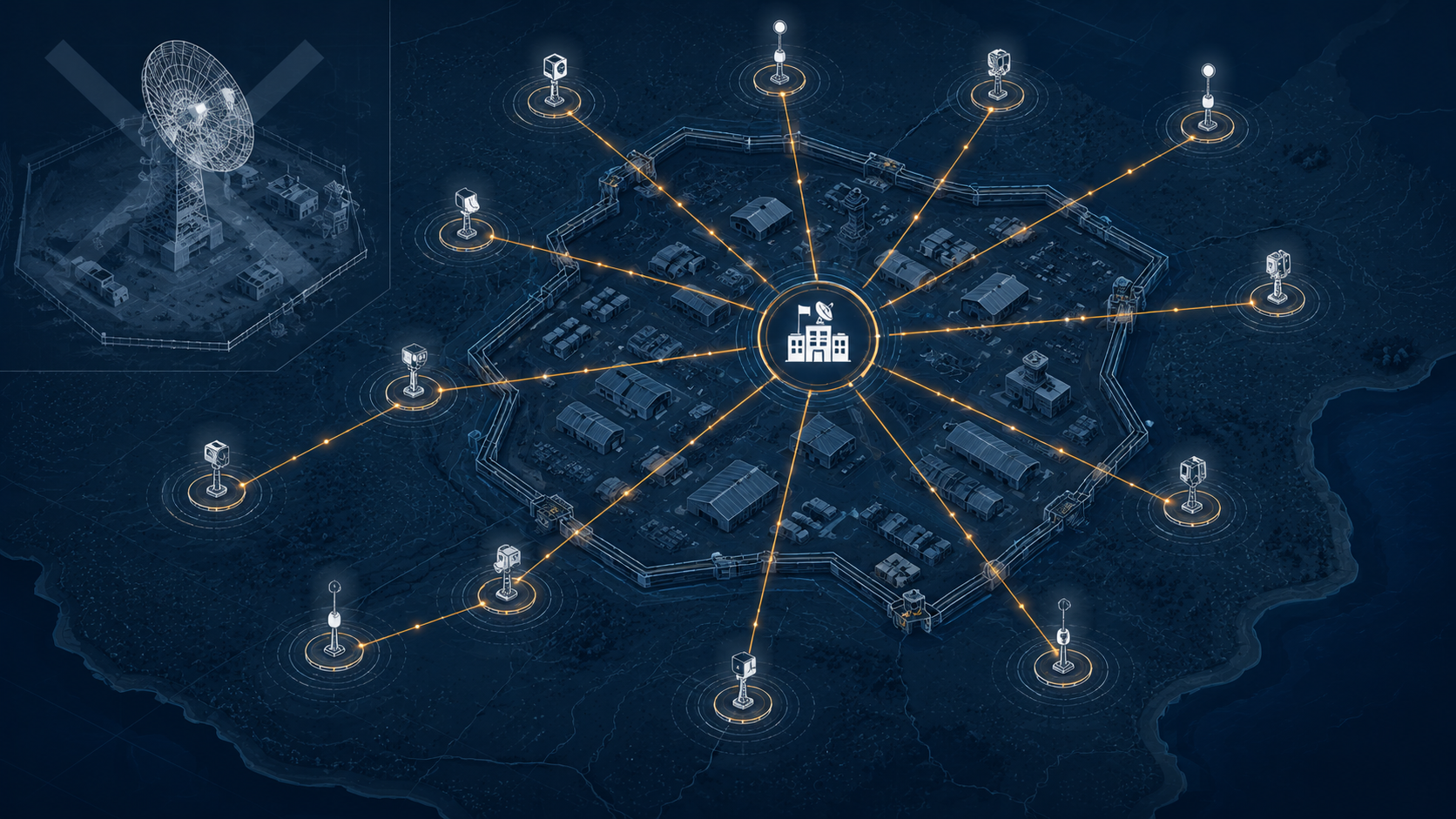
Rather than one weapon, a functioning C-UAS capability is built as a layered kill chain — a sequence of distinct steps, each of which can fail gracefully into the next:
This series' next two articles go deep on stages 1–3 (how AI actually fuses RF, radar, and EO/IR data to spot and classify a drone) and stages 4–5 (how a defender decides between a kinetic interceptor and a directed-energy weapon). This article focuses on why the whole chain had to be rebuilt in the first place.
Soft Kill First, When Possible
Jamming and spoofing — collectively "soft kill" — have proven to be relatively low-cost countermeasures and are typically the first line of defense precisely because they don't consume an expensive interceptor. But this layer has a hard limit: it depends on the drone actually communicating with a controller or relying on GPS. Increasingly capable adversary drones now fly pre-programmed routes, navigate visually, or use fiber-optic control lines specifically to defeat jamming — meaning soft kill alone is no longer a reliable universal answer, and defenders increasingly have to assume some fraction of any incoming raid will make it past the electronic warfare layer.
The Emerging Answer: Rebuilding Around Cost, Not Just Capability
The defense industry's response to the cost-asymmetry problem is converging on a few clear strategies:
Cheap, purpose-built interceptors. Systems like the Coyote family and newer low-cost interceptor drones are explicitly designed to be "affordable enough to lose," restoring a workable exchange ratio.
Directed energy. Lasers and high-power microwave (HPM) weapons promise a near-zero marginal cost per engagement once built — the subject of the third article in this series.
Distributed, tile-based architecture. Rather than concentrating sensors and effectors at one expensive point of failure, newer concepts distribute detection and engagement capability across the battlespace, so capacity — not just individual system capability — becomes the design target.
AI-driven automation. Because a swarm can present more targets than a human operator can individually evaluate and authorize engagement against in real time, AI decision-support is increasingly treated as a required layer, not an optional upgrade — a theme that runs through every article in this series.
One recent industry analysis made an important distinction: current C-UAS shortfalls often aren't because defenders can't technically defeat an individual drone — they're because defenses lack the capacity to do it repeatedly, cheaply, and fast enough when operators are saturated with decisions and expensive effects get consumed faster than they can be replenished. That's an architecture problem as much as a technology problem, and it's why the most credible near-term solutions focus as much on cost curves and magazine depth as on raw detection or kill probability.
The Bottom Line
Cheap drones didn't out-fly or out-maneuver traditional air defense — they out-priced it. A defense architecture built to shoot down a handful of expensive, sophisticated threats per engagement simply was never designed for an attacker who can afford to lose dozens of cheap ones. Fixing that requires more than a better missile; it requires rethinking the whole kill chain around cost, scale, and speed of decision-making — which is exactly the ground this series covers next: how AI actually spots a small drone in the first place, how defenders choose between kinetic and directed-energy responses, and why a swarm of drones is a fundamentally harder detection problem than a single one.
Sources referenced: Cyber Defense Review (U.S. Army, 2026), Inside Unmanned Systems reporting on interceptor economics, AeroVironment analysis on C-UAS architecture, SOF News Monthly Drone Report (2026), Global Security Review, and open-source reporting on Red Sea, Eastern European, and Gulf drone-intercept engagements.